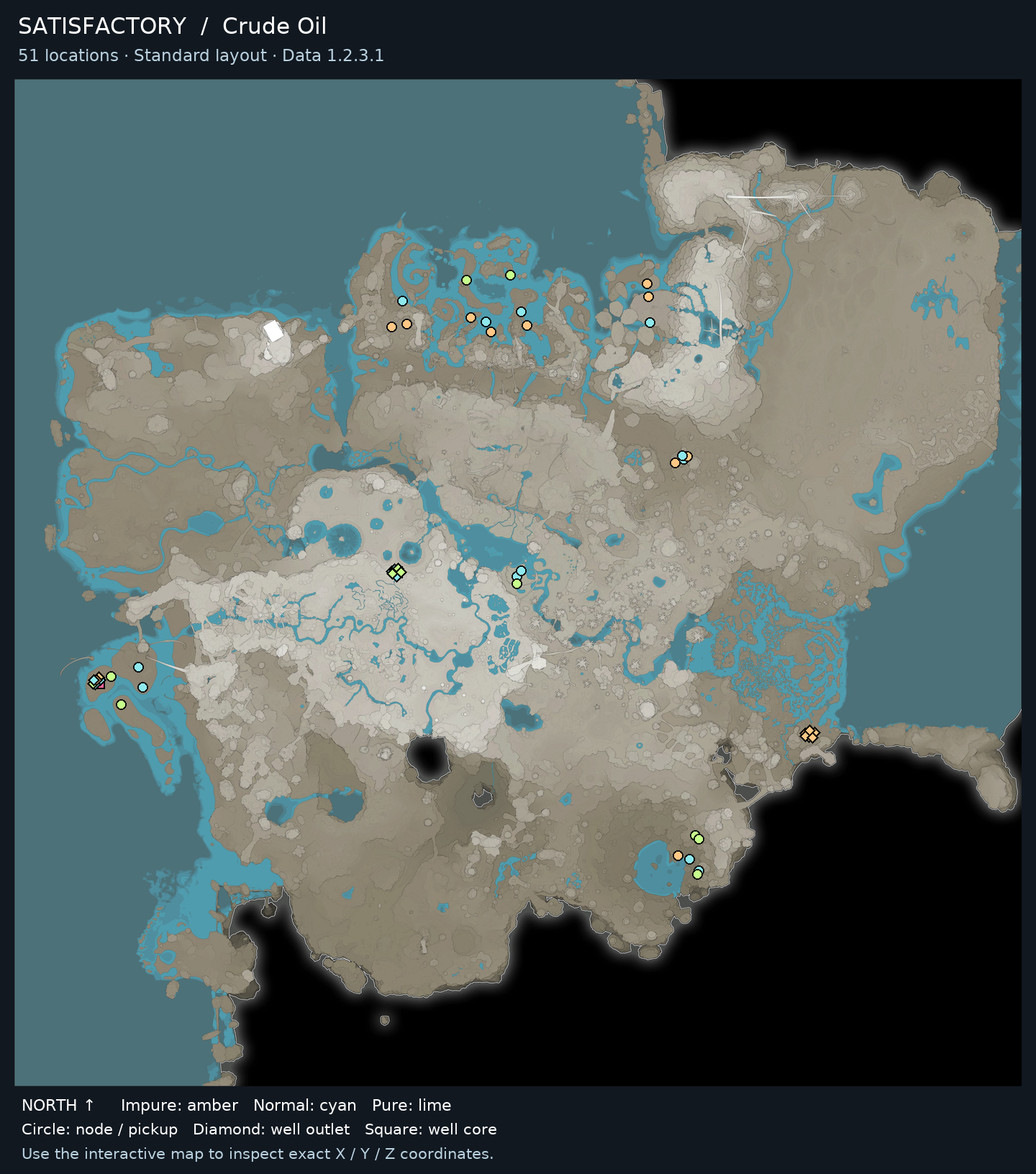
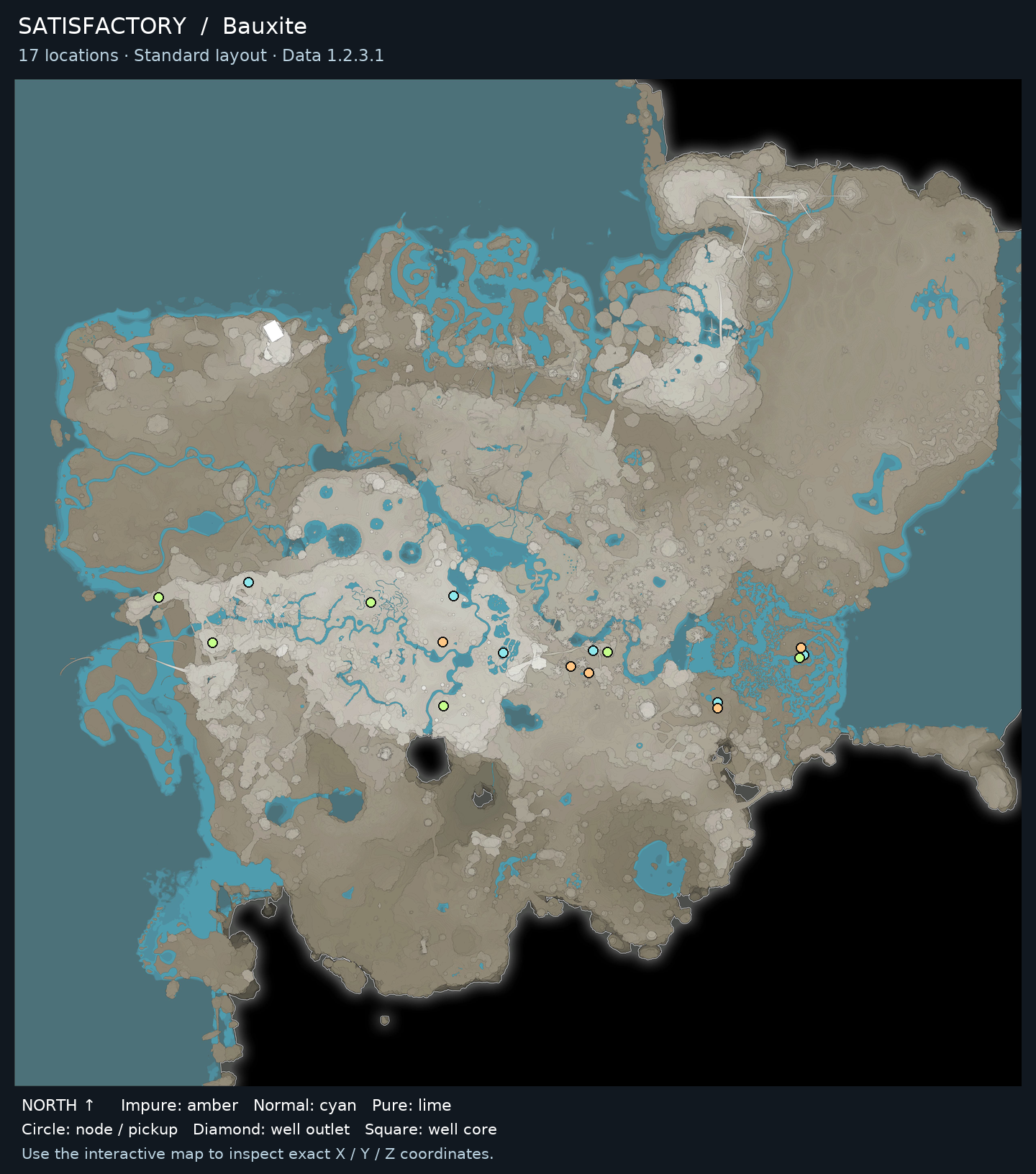
Water Extractors turn a suitable water body into a continuous fluid input for factory production. A complete water line includes extraction, powered equipment, pipes, and a destination that can accept the delivered fluid.
1.2 · Standard resource layout · Data 1.2.3.1
WHERE & HOW TO FARM
Where to farm
Choose a water body with room for extractor placement and a practical pipe route to the intended production area. Check the terrain and factory layout before building the destination…
Set up water as a reusable factory input: place Water Extractors in a water body, power them, and pipe their output to the production site. The target here is delivered water for a fluid-consuming production line, rather than a coal generator setup.
Filter a resource, then select a marker or location below for its purity, elevation and coordinates. The map is hosted here.
Standard resource types and purity · Game-data snapshot 1.2.3.1. Randomized worlds differ. Nearby markers may be separated by cliffs or caves.
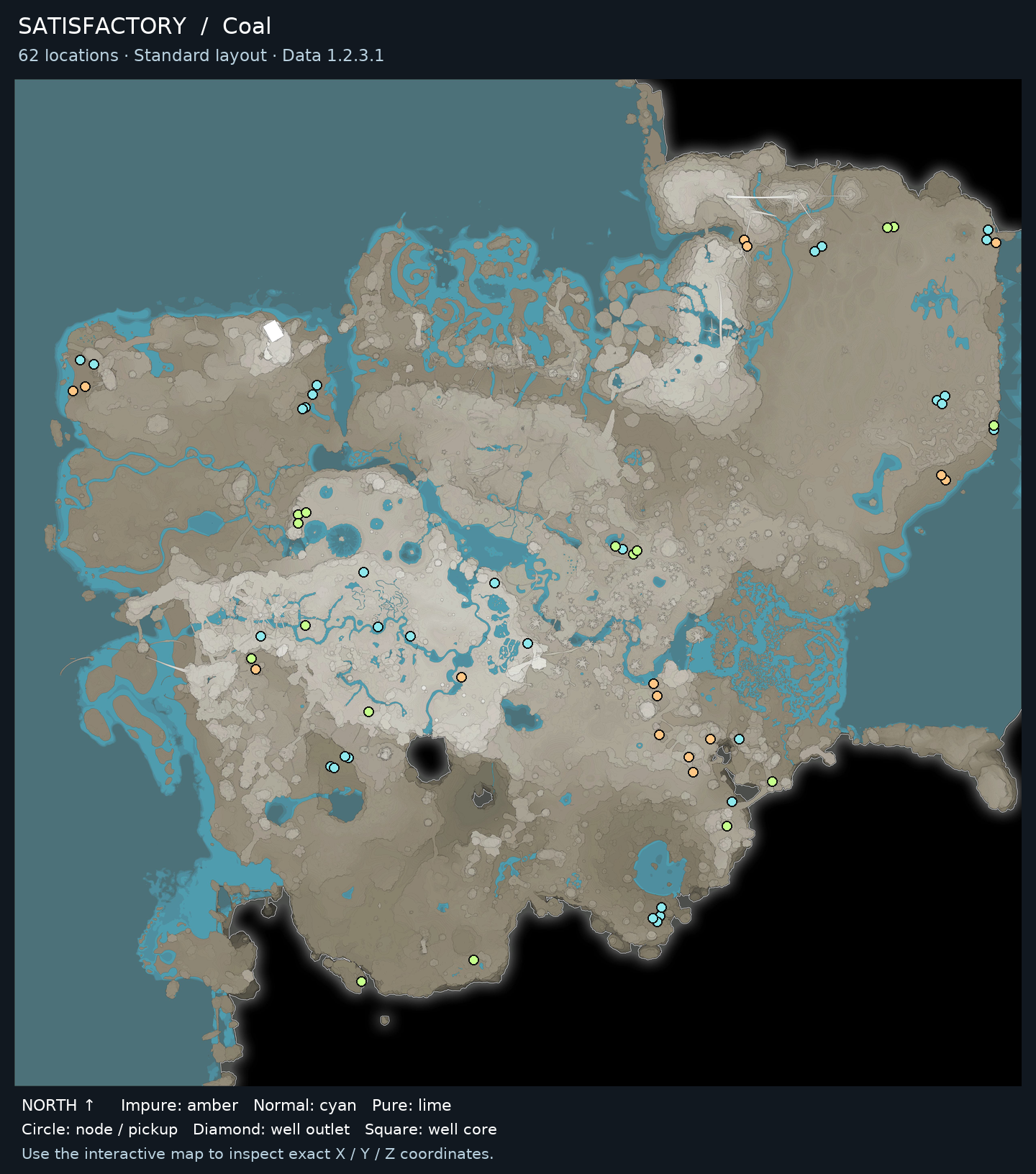
62 Coal locations
Coal locations · Select a marker to inspect its coordinates.
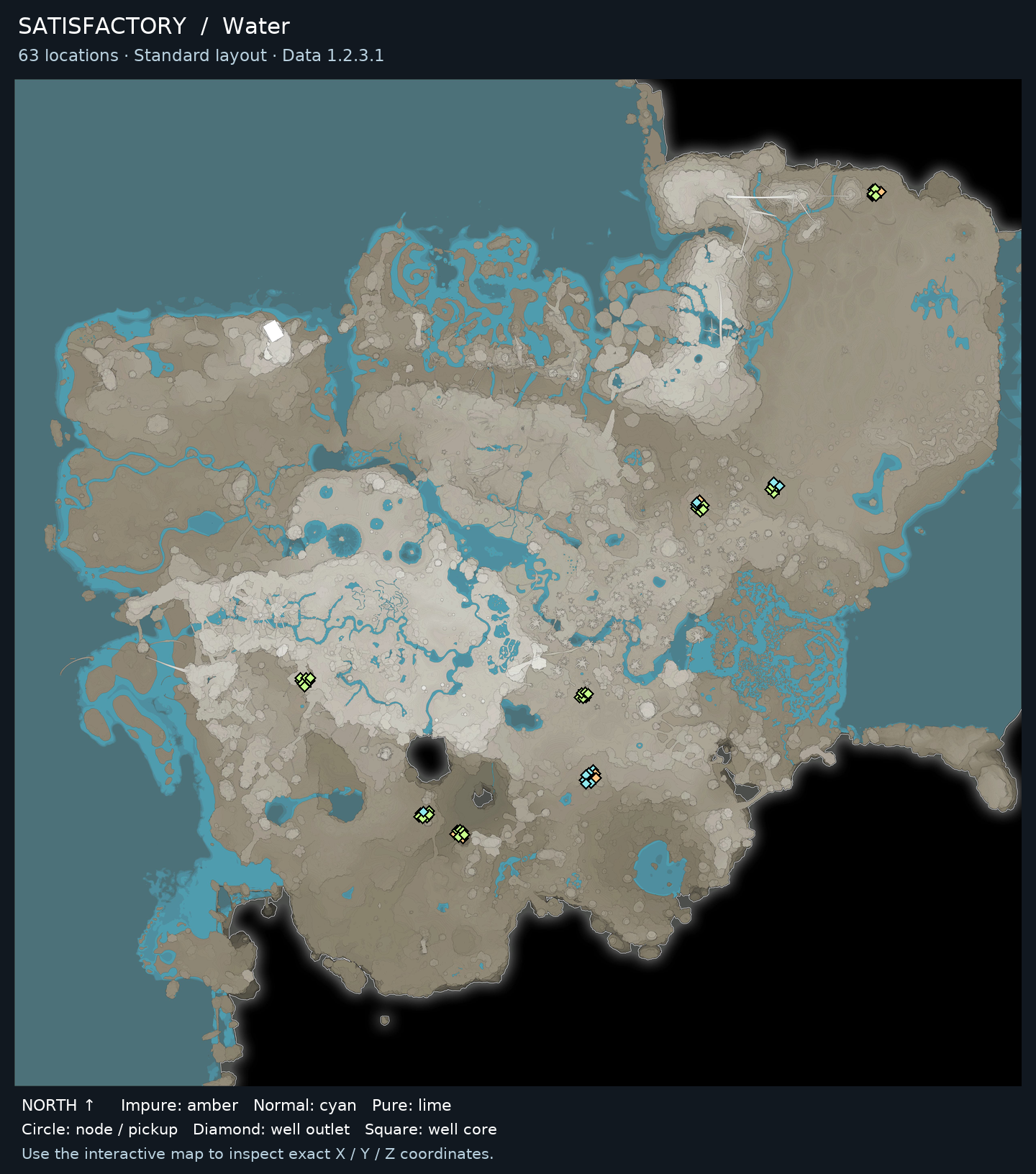
● Impure: amber● Normal: cyan● Pure: lime◆ Well outlet■ Well core
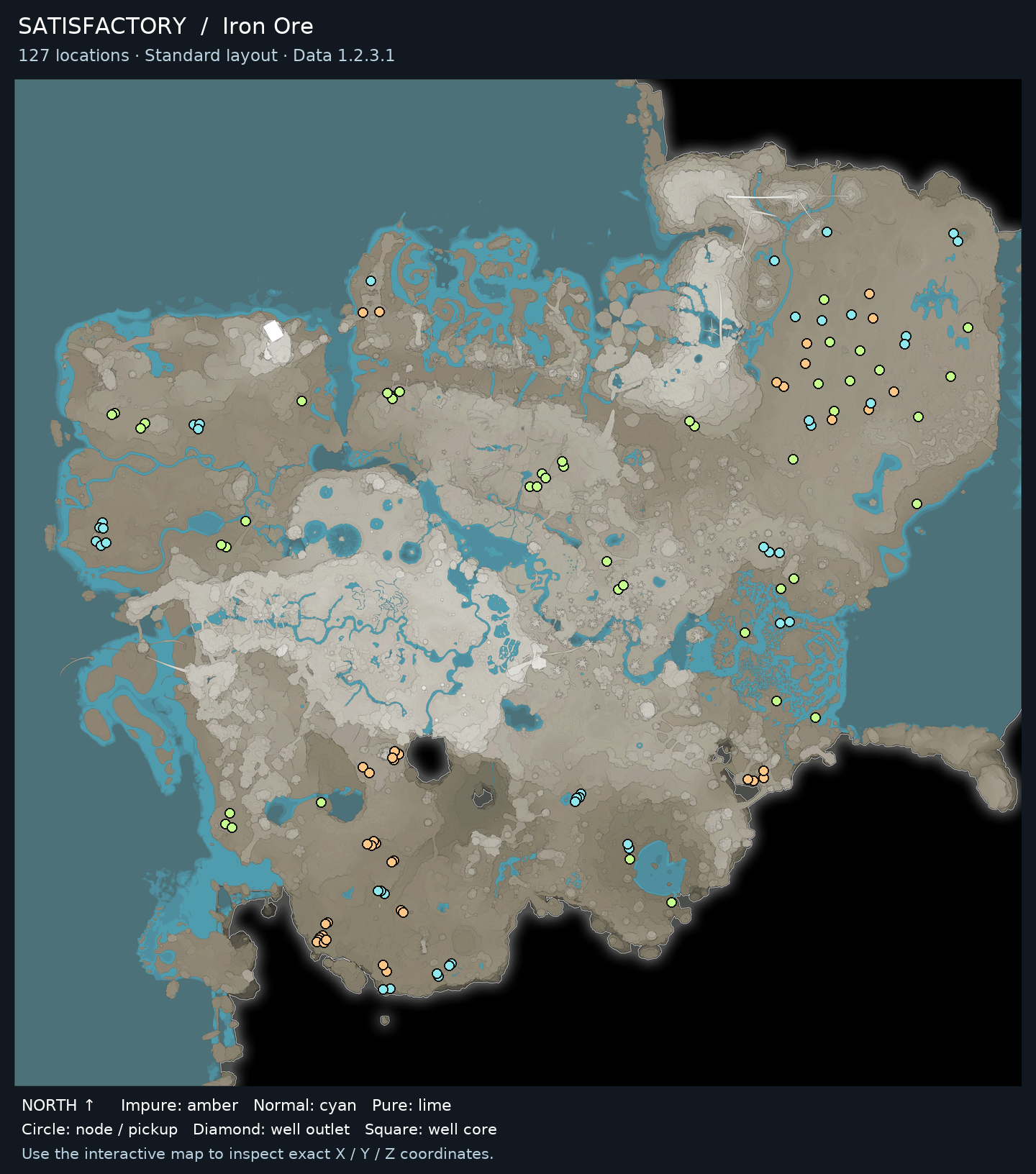
More resource maps for this guide
Water locations on the Satisfactory world map · Standard resource layout · Data 1.2.3.1
GET STARTED
How to farm
Choose a water body with room for extractor placement and a practical pipe route to the intended production area. Check the terrain and factory layout before building the destination around the inlet.
Before you go
Water Extractors and a water body where they can be placed.
Pipes connecting the extractor outlets to the production site.
A powered grid connection for the extraction equipment.
A production destination that uses water and has room for its fluid connections.
Choose the production site that needs water, then trace a pipe route back to a nearby water body.
Place Water Extractors in the water and connect each outlet to the pipe network.
Connect the extractor equipment to a powered grid so it can operate.
Route the pipes toward the destination, keeping junctions and connections accessible for inspection.
Connect the delivered water to the intended production building’s fluid input.
Start the line and inspect the extractor and production building status to confirm water is being delivered and consumed.
If the destination stops operating, check the route and equipment power before adding more extractors.
Farming tips
Leave access to pipe connections and junctions so you can trace a stalled line without rebuilding the site.
Keep the water line distinct from nearby belts and other pipes; clear routing makes interruptions easier to locate.
Repeat, collect and use
Water extraction and delivery continue while the extractors have power and their pipe route remains connected to an operating destination. This is a repeatable supply loop, not a one-time collection: maintain the line and add extraction capacity only when the intended production requires it.
Common mistakes
Placing an extractor without connecting its outlet leaves water undelivered; extend a pipe to the production input.
Forgetting the extractor’s power connection stops the supply equipment; include it in the grid plan.
Expanding extraction before checking a stalled destination may leave the actual pipe or power problem unresolved; inspect the existing line first.
When to stop or switch
Stop expanding when the intended production line receives water and runs as planned. If it stalls, identify whether power, piping, or destination demand is limiting the line before adding equipment.
Choose a water body with room for extractor placement and a practical pipe route to the intended production area. Check the terrain and factory layout before building the destination around the inlet.
Water Extractors and a water body where they can be placed.
Pipes connecting the extractor outlets to the production site.
A powered grid connection for the extraction equipment.
A production destination that uses water and has room for its fluid connections.
Rate not listed
Related guides
More guides for gathering materials and making progress.